2018年1月16日 星期二

化學暴露可能可以解釋糖尿病風險的差距

Ref:  Chemical Exposures May Explain Disparities in Diabetes Risk - Medscape - Dec 01, 2017.

為何在某些民族比如非裔美人和拉丁美洲族群糖尿病發生率較高
可能可以用暴露在EDCs (endocrine-disrupting chemicals干擾內分泌的化學物質) 的多寡有關


一篇發表在Diabetes Care的研究指出塑膠製品或是髮膠除臭劑中的化學物質
不只會增加糖尿病風險對不同族群的影響也不同

研究者回顧了1996-2016年間美國國家圖書館的文章檢視ECD暴露和代謝功能異常間的關係研究者找出了27個前瞻性研究檢視ECD暴露和糖尿病風險的關聯找出可能相關的化學物質其中包括

Polychlorinated biphenyls (PCBs) 多氯聯苯 
1977已被美國環保局禁用但是仍存在於環境中 (尤其是魚乳製品等食物)
許多研究顯示PCB可能使糖尿病風險增加2倍

Organochlorine (OC) pesticides 有機氯農藥
同樣在1970年間被禁用但是仍存在於某些高脂肉類或高脂魚類及乳製品中
OC同樣會使糖尿病風險增加2倍左右

其他和糖尿病風險相關的EDC包括

交通相關的空氣汙染和細懸浮微粒 
Bisphenol A 雙酚A: 常用於製作塑膠製品
Phthalates 鄰苯二甲酸鹽: 常用於食物包裝玩具建材藥品及個人用品(香水髮膠 除臭劑等)

最重要的是研究發現 EDC暴露對非白人的族群影響較大舉例來說一個研究發現PCB 使非白人族群的糖尿病風險增加3倍,而對白人族群的糖尿病風險增加則是2倍另一個研究發現OC pesticide也是同樣的結果

而這些易感族群可能又住在鄰近工業區較多空氣污染的地方也較難取得健康食物

如何幫助病人減少EDC暴露呢?
精明的臨床照護者在面對病人時尤其是沒有典型第2型糖尿病人特色和家族史者 還有需要用到比需要預期多的藥才能控制的病人,也要考慮環境因素取得完整的職業史環境暴露狀態

這可以幫助釐清病人是否有暴露於可能使疾病惡化的化學物質中
醫師應該建議病人: 仔細清洗蔬菜水果 吃魚或肉時把肥肉或魚皮削剪掉汰換掉舊的螢光燈炮或是老舊建材來減少PCB暴露在曾使用有機氯農藥的地區要常清洗環境和雙手尤其是吃飯或準備飲食前

為了減少雙酚A暴露建議避免#7塑膠容器,建議用玻璃或瓷器取代同時要減少接觸常用於收據的感熱紙。  玩具浴簾地板材等盡量用非塑膠的材質替代減少鄰苯二甲酸鹽暴露
也要減少使用#3的塑膠


鼓勵病人閱讀個人用品的製造標籤確認這些用品不含鄰苯二甲酸鹽同時避免含有合成香料的物品


2018年1月15日 星期一

Critical illness-related corticosteroid insufficiency (CIRCI)

Reference: https://insights.ovid.com/pubmed?pmid=28938253

難以用單一test診斷, 但臨床醫師可以用 high dose ACTH stimulation test
(給cosyntropin (250 μg)後60分鐘cortisol改變< 9 μg/dL)
或是random plasma cortisol ( < 10 μg/dL ) 來判斷

用plasma total cortisol 比free cortisol或salivary cortisol好

Sepsis:
沒有shock不要用
考慮用在septic shock且對fluid /moderate-high dose vasopressor沒反應者
有要用的話用low dose, long duration ( IV hydrocortisone < 400 mg/day for ≥ 3 days at full dose )

Early moderate/ severe ARDS: IV methylprednisolone 1 mg/kg/day

Major trauma: 不建議用corticosteroids

2017 Bethesda System

The Bethesda System for Reporting Thyroid Cytopathology (TBSRTC) 更新了
2017 Bethesda System同時發表在Thyroid (2017;27:1341-1346) 和
the Journal of the American Society of Cytopathology (2017;6:217-222).

2017年的版本和2009年比較並沒有太大的改變但是有些"加強"之處

美國內分泌學會主席R Mack Harrell MD說
"包括2017 Bethesda System2015 ATA guidelines和即將出爐的AACE thyroid nodule guidelines都傾向避免不必要的甲狀腺手術"

"還有當手術是必要時這些改變 是為了確保手術是最保守的那一種不管是為了診斷或治療 除非必要不要讓病人變成thyroid hormone dependent"
"我們逐漸了解甲狀腺細胞病理學的判讀必須要更廣泛地納入臨床病史理學檢查和頸部超音波結果 才會給病人帶來最大價值"
"這個新的思考方式下細胞病理學家不能只是坐在黑暗的房間裡看片而是要和病人內分泌科醫師內分泌外科醫師有所連結"


最主要的改變是NIFTP tumor的位置
NIFTP tumor = noninvasive follicular thyroid neoplasm with papillary-like nuclear features

2017Bethesda System 改變包括計算惡性風險方式的改變

新的版本仍然保留了6個診斷分類
Nondiagnostic or unsatisfactory
Benign
Atypia of undetermined significance (AUS) or follicular lesion of undetermined significance (FLUS)
Follicular neoplasm or suspicious for a follicular neoplasm (FN/SFN)
Suspicious for malignancy
Malignant

NIFTP tumor 在2016/4以前被歸在甲狀腺癌它們的細胞學改變和甲狀腺癌一樣
但是長期追蹤時並沒有recur or metasize也就是說它們的行為和甲狀腺癌不同
因為表現不典型通常會落在categories 345而且唯有被整個切下來在顯微鏡下檢查有沒有invasion才能被診斷"不是cancer"

Bethesda 3 category的腫瘤如果排除NIFTP惡性比率會從10-30% 下降到6-18%而一般thyroid nodule 是thyroid cancer的機率是6-8%如果加上了NIFTP Bethesda 3 category的診斷會更加不確定不過因為必須要切下來看才能排除惡性 surgical decision making 在Bethesda categories 345 基本上是沒有改變的

但是hemi-thyroidectomies會戲劇化地增加因為如果是NIFTP lobectomy 幾乎可以治癒
保留另一邊的甲狀腺組織對病人和後續照護者也較理想

其他改變包括

加入對於AUS/FLUS, FN/SFN 做molecular test 的建議
FN/SFN的定義修正了現在包括 "mild nuclear changes associated with papillary thyroid canrcinoma"的個案
而malignant 則限制在有"典型" papillary thyroid cancer的個案


Reference: Thyroid Nodules: Bethesda System Update Changes Clinical Practice - Medscape - Jan 09, 2018.

2017年12月17日 星期日

2018 ADA Summary of revision 的整理

2018 ADA Summary of revision
General changes
  • 2018如果出現新的證據ADA會更常線上更新治療準則
  • Standards of care現在是ADA 唯一臨床建議指引
  • 有些建議的證據等級有改變這些改變沒有標示在summary of revision

Section changes
Section 1. Improving care and promoting health in population
  • 整個section的名字改了
  • 增加了使用可信賴的資料指標來評估併改善糖尿病照護品質和減少支出
  • 增加關於族群健康在社會面向的討論
  • 增加關於在糖尿病照護中使用遠距醫療的討論

Section 2. Classification and Diagnosis of Diabetes
  • 加入建議要釐清使用HbA1C的時機和限制
    • 例如有紅血球變異實驗方法干擾或是會影響紅血球的turnover的狀況
    • Sick cell disease懷孕第23孕期的孕婦洗腎病人 最近有失血或輸血的病人 使用EPO的病人要用plasma glucose criteria 來診斷DM (而非A1C)
  • 針對小孩和青少年族群篩檢糖尿病前期和第2型糖尿病的建議改變了
    • 改成有過重或肥胖加上1項以上的危險因子就要去篩檢
    • (2.5)  過重(BMI> 同年齡性別的 85百分位BW or BH > 85百分位BW>120% 理想體重)加上以下1項以上的危險因子
      • 母親有糖尿病或懷該小孩時有妊娠糖尿病
      • 1等親或2等親有T2DM
      • 某些種族(Native American, African American, Latino, Asian American, Pacific Islander)
      • 胰島素阻抗的表現或相關表現 黑色棘皮症高血壓高血脂PCOSsmall for gestational age birthweight )
  • 雖然一般不被建議在有陽性結果時可以有足夠轉介資源的地方可以考慮做社區篩檢
  • 加入討論器官移植後糖尿病病人的細節

Section 3. Comprehensive Medical Evaluation and Assessment of Comorbidities
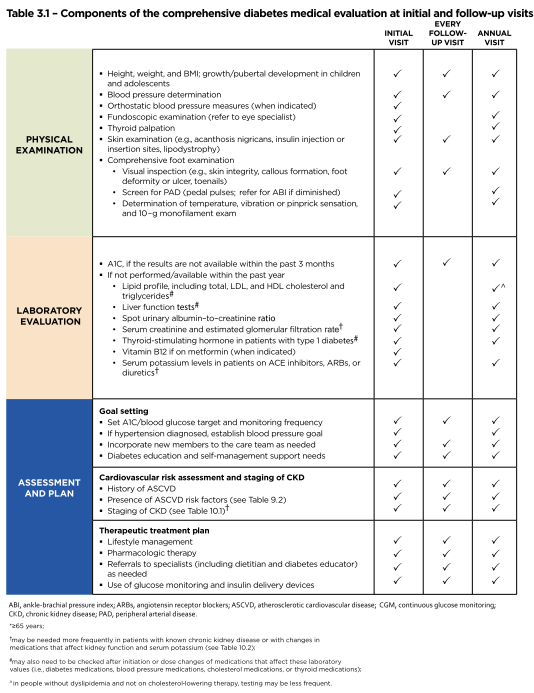
  • Table 3.1重新整理 告訴我們在第1次看到病人和之後追蹤要做哪些評估
  • Table 3.1
  • 疫苗章節配合CDC建議做修正
  • 加入在以病人為中心的照護要注意選擇病人語言的敘述
  • 胰臟炎被加入共病症的部分
    • 包括新建議: 考慮在需要接受全胰臟切除的慢性胰臟炎病人自體胰島移植來預防手術後的糖尿病
  • 加入考慮在有hypogonadism表現的糖尿病男性病人抽血液testosterone level  

Section 4. Lifestyle management
  • 一個建議被修正有效率的糖尿病自我照護教育和支持應以病人為中心可以從個人團體或是科技平台著手而且應該要對做出臨床決策有幫助
  • 釐清ADA對飲食的建議對於巨量營養素沒有單一理想的比例飲食計畫應該要個別化 (individualized)
  • 文字加上對低碳水化合物飲食的描述
    • " 低碳水化合物飲食對糖尿病病人的腳色仍不清楚一部分是因為 "低碳水化合物" 的定義各家不同範圍很廣雖然有些好處被描述這些幫助傾向是短期並且隨著時間變化這些效果並不會長期維持 "
    • "有些研究顯示極低碳水化合物飲食(verylow–carbohydrate) 或生酮飲食 (ketogenic diets) (一天小於 50-g CHO) 可能會帶來好處如果病人想嘗試這些方式只適合短期 (3-4個月)因為並沒有研究來證明長期這樣飲食是否會帶來好處或是傷害" (S43)

Section 5. Prevention or Delay of Type 2 Diabetes
  • 根據DPP研究結果調整了對於用metformin來預防pre-DM的文字敘述

Section 6. Glycemic targets
  • T1DM使用CGM 的建議不再侷限25歲以上而推廣到所有成年(18歲以上) 血糖沒有達標的病人
  • 介紹最近被核可在成年人使用的新的intermittent or “ flash” CGM device
    • The intermittent or “flash” CGM device, very recently approved for adult use only (18), differs from previous CGM devices. Specifically,it does not have alarms, does not require calibration with SMBG, and does not communicate continuously (only on demand). It is reported to have a lower cost than traditional systems. A study in adults with well-controlled type 1 diabetes found that flash CGM users spent less time in hypoglycemia than those using SMBG (19). However, due to significant differences between flashCGM and other CGM devices, more discussion is needed on outcomes and regarding specific recommendations.  (S56)
  • 加入了用不需要用SMBG校正的新的 CGM 裝置來調整治療決策的細節
    • For most CGM systems, confirmatory SMBG is required to make treatment decisions, though a randomized controlled trial of 226 adults suggested that an enhanced CGM device could be used safely and effectively without regular confirmatory SMBG in patients with well-controlled type 1 diabetes at low risk of severe hypoglycemia(1). Two CGM devices are now approved by the U.S. Food and Drug Administration (FDA) for making treatment decisions without SMBG confirmation (18,20), including the flash CGM device. (S56)
  • 一樣強調A1C的限制
  • level 1 hypoglycemia從原來的” glucose alert value” 重新命名為” hypoglycemia alert value”

Sect 7. Obesity management for the treatment of Type 2 Diabetes
  • Table 7.2 加入了國家平均取得之藥價(NADAC price)

Section 8. Pharmacologic approaches to glycemic treatment
  • 加入新的建議建議有ASCVD的病人治療的選擇要從生活型態改變和metformin開始之後配合可以減少心血管疾病事件和心血管疾病造成的死亡的藥物 (目前是empagliflozin liragluide (建議等級A)canagliflozin (建議等級C))
  • 加入了新的Table 8.1Fig 8.1 Table 8.1可用來幫助選擇治療藥物以及幫忙做SDM (共享治療決策)
  •  
  •  
  • Table 8.2 修正來強調美國境內可用的降血糖藥物藥理學和機轉
  • Table 8.3, 8.4 加入藥價資訊
Section 9. Cardiovascular Disease and Risk management
  • 加入新建議建議所有高血壓的糖尿病病人應該在家量血壓來幫忙確認masked hypertension or white coat hypertension 也可以改善服藥行為

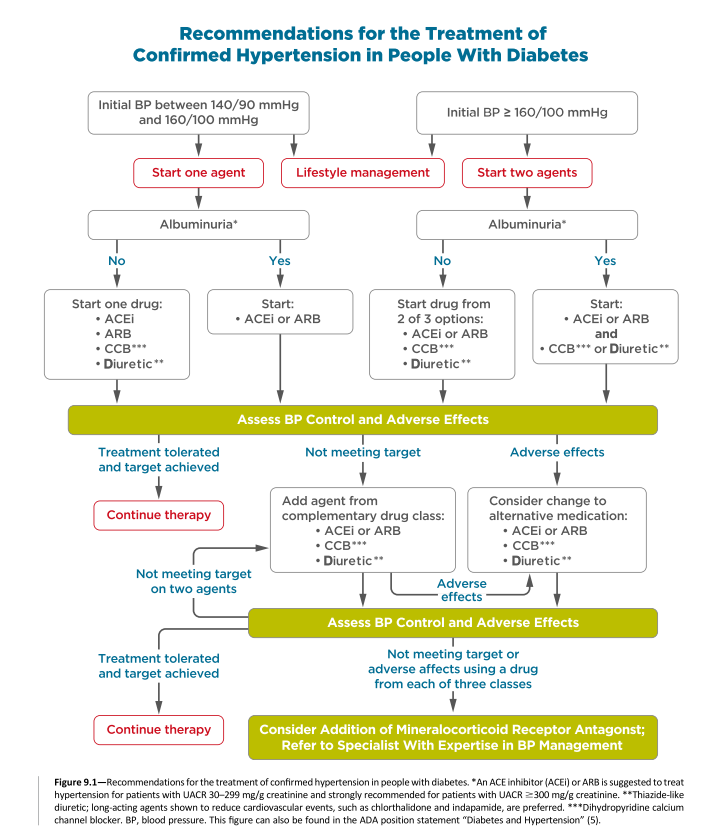
  • 加入新的Fig 9.1  來建議同時有糖尿病和高血壓的病人如何選擇藥物
  • 加入新的Table 9.1 來比較比較積極和標準血壓控制的各項研究
  • 加入新建議建議在難以治療的高血壓病人考慮使用mineralocorticoid receptor antagonist

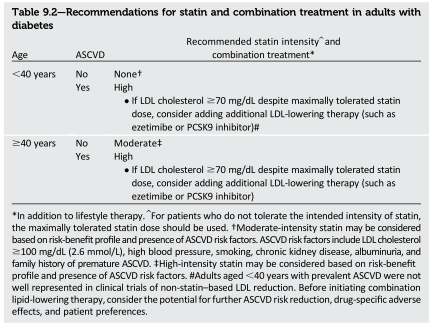
  • 血脂建議修正為強調風險根據風險分為2ASCVD 和沒有的
    • 因為研究結果在老人和中年人好處類似 40-75歲和> 75歲沒有ASCVD的病人建議使用moderate intensity statin
    • Table 9.2 也據此更新了
  • 加上使用非statin LDL藥物的建議
    • 同時有糖尿病和ASCVD的病人如果使用最大容忍劑量的statinLDL 還是>=70mg/dl 考慮使用額外的降LDL藥物 (ezetimibe PCSK9 inhibitor) 在評估CV 風險藥物副作用和病人選擇後Ezetimibe可能是較優先的選擇 因為藥價較低 (建議等級A)  (S92)

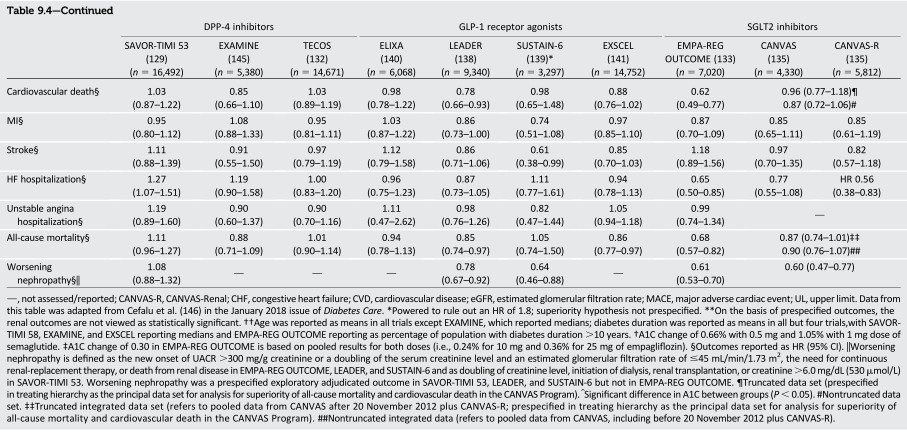
  • 加入新的Table 9.4 整合所有CVOT studies
 

Section 10. Microvascular Complications and Foot care
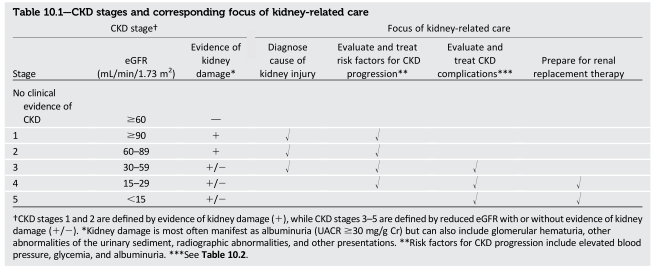
  • 加入新的Table 10.1 代替之前的10.1 10.2
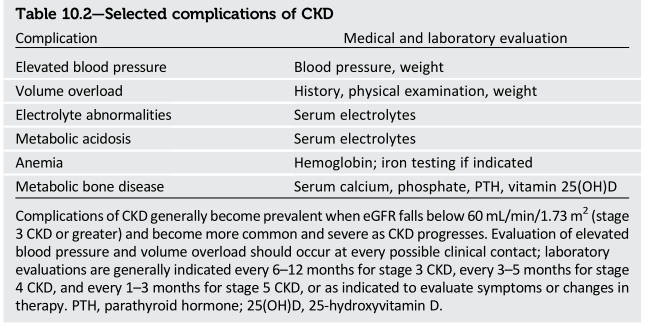
  • 新的Table 10.2 描述CKD併發症和相關醫療與實驗室檢查評估
  • 加入關於Acute kidney injury的新章節
    • Acute Kidney Injury
    • Acute kidney injury (AKI) is usually diagnosed by a rapid increase in serum Cr,which is also reflected as a rapid decrease in eGFR, over a relatively short period of  time. People with diabetes are at higher  risk of AKI than those without diabetes  (15). Other risk factors for AKI include  preexisting CKD, the use of medications  that cause kidney injury (e.g., nonsteroidal anti-inflammatory drugs), and the use of medications that alter renal blood flow and intrarenal hemodynamics. In particular, many antihypertensive medications  (e.g., diuretics, ACE inhibitors, and angiotensin receptor blockers [ARBs]) can reduce intravascular volume, renal blood flow, and/or glomerular filtration. There  is a concern that sodium – glucose cotransporter 2 (SGLT2) inhibitors may promote  AKI through volume depletion, particularly when combined with diuretics or  other medications that reduce glomerular filtration. However, existing evidence from clinical trials and observational studies suggests that SGLT2 inhibitors do not signi ficantly increase AKI (16,17). Timely identification and treatment of AKI are important because AKI is associated with increased risks of progressive CKD and other poor health outcomes (18). (S106-107)
  • 討論降血糖藥物對腎病變延遲或加重的影響
  • 加入新建議 anti-VEGF Ranibizumab在有PDR的病人可減少失明風險和傳統治療(panretinal laser photocoagulation therapy) 相比是non inferiority
  • 加入新章節討論高壓氧對糖尿病足的治療

Section 11. Older adults
  • 加入3個新建議 強調對老年病人個別化藥物治療的重要在維持A1C目標同時減少低血糖風險避免過度治療以及簡化治療方式

Section 12. Children and Adolescents
  • 加入新建議治療兒童和青少年的T1D要考慮積極胰島素處方SMBGCGM和自動化胰島素傳送系統
  • 加入何時要篩檢celiac disease 的建議
  • 拿掉了estimating GFR的建議因為在青少年此公式不準
  • 增加許多關於兒童T2DM的建議

Section 13. Management of Diabetes in Pregnancy
  • 加入新建議強調胰島素是懷孕期間控制T1DMT2DM的優先選擇
  • 因為有新的證據加入新建議 建議T1DMT2DM的女性在第1孕期末到胎兒出生前 給予低劑量Aspirin (60-150mg/day, usual dose 81mg/day) 來減少子癇前症的風險(建議等級A)

Preeclampsia and Aspirin
Recommendation
Women with type 1 or type 2 diabetes should be prescribed low-dose aspirin 60 – 150 mg/day (usual dose 81 mg/day) from the end of the first trimester until the baby is
born in order to lower the risk of preeclampsia. A

Diabetes in pregnancy is associated with  an increased risk of preeclampsia (47).
Based upon the results of clinical trials, the U.S. Preventive Services Task Force
recommends the use of low-dose aspirin (81 mg/day) as a preventive medication
after 12 weeks of gestation in women  who are at high risk for preeclampsia (48).
A cost-bene fi t analysis has concluded that this approach would reduce morbidity,
save lives, and lower health care costs (49). (S140)

Section 14. Diabetes Care in the Hospital
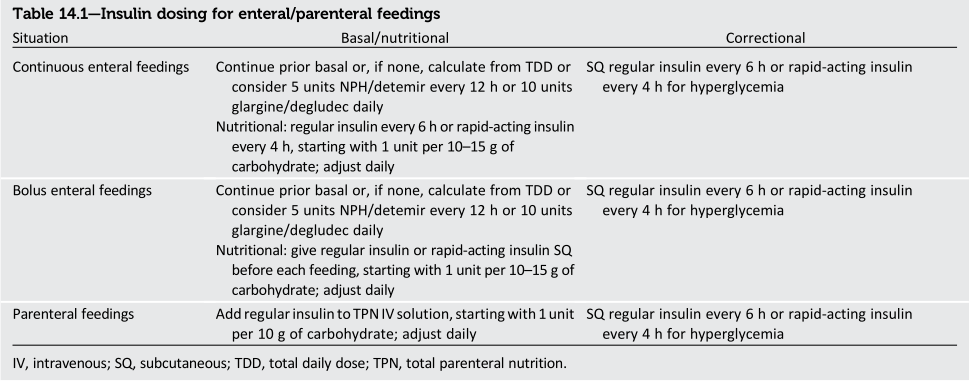
  • degludec 被加入管灌病人或是Parenteral feedings的血糖控制選擇中(table 14.1)